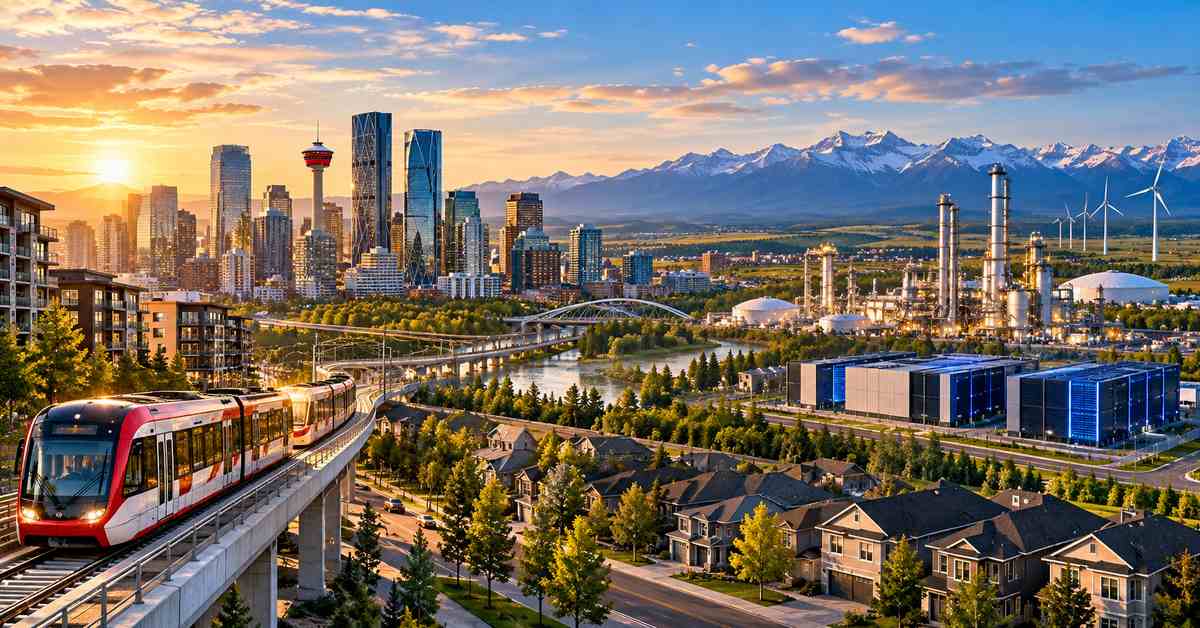




How Major Alberta Projects Could Shape the Next Real Estate Growth Cycle
By Malvinder S. Tiwana | Alberta Real Estate
Alberta is entering a period in which real estate may increasingly be influenced not only by interest rates, population growth and housing supply, but also by the scale of infrastructure and investment planned across the province.
From Calgary’s Green Line LRT and Edmonton’s expanding transit network to proposed passenger rail between Calgary and Edmonton, major energy infrastructure, hydrogen and carbon-capture projects, artificial intelligence data centres, industrial developments and potential nuclear projects, Alberta has a remarkably large pipeline of proposed and developing investments.
For real estate buyers and investors, the important question is not whether every project will be completed. Many are still proposed, under study or dependent on financing, regulatory approvals and final investment decisions. Alberta’s official Major Projects inventory tracks public and private projects valued at $5 million or more and provides a useful picture of the province’s development pipeline.
The more important question is: What could these projects mean for Alberta communities and real estate over the next 5, 10 and 20 years?
Calgary: Transit, Infrastructure and Continued Urban Growth
Calgary is already experiencing significant infrastructure investment, with the Green Line LRT being one of the most important projects from a real estate perspective.
The southeast segment is under construction and is planned to provide 16 kilometres of LRT infrastructure and 10 stations. The City of Calgary identifies transit-oriented development as an important part of the Green Line’s long-term potential and estimates that approximately 114,000 new housing units could eventually be supported within 800 metres of stations and other transit-oriented development areas.
For real estate, the significance extends beyond the rail line itself.
Areas that gain better access to employment centres, shopping, schools and public transportation can become more attractive to both residents and developers. Over time, this can encourage higher-density housing, apartments, mixed-use development and redevelopment of underutilized properties.
However, proximity to transit does not automatically mean every property will increase in value by the same amount. Zoning, redevelopment potential, property condition, parking, surrounding development and actual transit accessibility will all matter.
Calgary Airport and Regional Rail
Another development worth watching is the potential expansion of passenger rail.
Alberta’s Passenger Rail Master Plan identifies a long-term network that could include frequent airport connections and higher-speed rail between Calgary and Edmonton through Red Deer. The province has committed $15 million over three years for initial planning, industry engagement and assessment of possible financing and delivery models.
This is particularly interesting for communities along the Calgary-Edmonton corridor.
If passenger rail eventually becomes a functioning regional transportation system, communities such as Airdrie, Red Deer, Leduc and other municipalities along the corridor could potentially experience increased interest from residents and businesses seeking alternatives to daily highway travel.
It could also create opportunities for transit-oriented development around future stations.
But this is a long-term planning opportunity rather than an immediate real estate catalyst. Alberta’s current process includes industry consultation and further decisions before major construction would occur.
Edmonton: LRT Expansion and Western Growth
Edmonton is also undergoing major transportation investment.
The Valley Line West LRT is a 14-kilometre extension from downtown Edmonton to Lewis Farms, with construction anticipated to be completed in 2028 before testing and opening.
At the same time, construction is advancing on the Capital Line South LRT extension, which will extend transit service southward toward Ellerslie Road.
For real estate, these projects could reinforce development patterns around major transportation corridors.
Better transit connectivity can support apartment development, student housing, rental properties and mixed-use communities. It can also make established neighbourhoods more attractive to buyers who want access to transit without living in Edmonton’s downtown core.
The broader lesson for investors is important: infrastructure can gradually change the geography of demand.
Alberta’s Energy Infrastructure Could Create Another Employment Cycle
Real estate in Alberta has historically been closely connected to the energy sector.
That relationship could remain important even as Alberta’s energy economy becomes more diversified.
The provincial Major Projects inventory includes significant proposed or developing projects involving pipelines, hydrogen, ammonia, carbon capture, petrochemicals, power generation and other industrial infrastructure. Among the projects listed are the Air Products Hydrogen Production and Liquefaction Facility, Pembina and Marubeni’s proposed hydrogen and ammonia complex, carbon-capture projects and major pipeline infrastructure.
The potential real estate effect is straightforward.
Large industrial projects can create construction employment first and operational employment later. Workers and contractors need housing, while companies require industrial buildings, warehouses, offices, hotels and supporting services.
This could benefit communities such as Edmonton, Fort Saskatchewan, Strathcona County, Grande Prairie, Red Deer and other industrial and energy centres, depending on which projects proceed.
The Data Centre and Artificial Intelligence Opportunity
Perhaps one of the more interesting emerging trends is Alberta’s potential role in the data-centre economy.
The province’s Major Projects inventory now includes major proposed data-centre developments, including a $13-billion Meta data centre and other large digital infrastructure projects. The July 2026 update also identified the proposed $15-billion Malachite One Data Centre in Yellowhead County.
Data centres are different from traditional industrial projects because they can require substantial electricity, land, telecommunications infrastructure and specialized technical services.
If Alberta attracts a meaningful share of Canada’s future AI and data-centre investment, the impact could extend beyond the facilities themselves.
There could be demand for:
- Industrial and commercial land
- Electrical and utility infrastructure
- Construction workers’ accommodation
- Rental housing
- Professional services
- Warehousing and logistics
- Technology-related employment
Chestermere is also worth watching. Alberta’s May 2026 Major Projects update identified a proposed AI data-centre hub in Chestermere.
For investors, however, proposed data-centre projects should be treated carefully. Announced investment is not the same as completed investment, and the timing of large technology projects can change.
Carbon Capture, Hydrogen and the Changing Industrial Landscape
Alberta is also positioning itself for lower-emission industrial development.
The province is supporting carbon capture, utilization and storage, including a program designed to provide incentives for eligible capital investment. Alberta says CCUS can support industries including oil and gas, power generation, hydrogen, petrochemicals and cement.
If these projects move forward at scale, they could help maintain Alberta’s industrial employment base while creating new engineering, construction, operations and technology-related opportunities.
From a real estate perspective, this matters because employment is one of the fundamental drivers of housing demand.
Where long-term employment centres develop, housing demand can follow.
Nuclear Power: A Long-Term Possibility to Watch
Nuclear power is another emerging discussion in Alberta.
The province’s Major Projects inventory includes the proposed Peace River Nuclear Power Project, listed at a very large potential scale.
This should be viewed as a long-term possibility rather than an immediate real estate driver.
If nuclear development eventually advances, the economic footprint could be substantial, potentially involving construction employment, skilled trades, engineering, manufacturing and long-term operations.
The real estate impact would depend heavily on the eventual location, project scale, workforce requirements and supporting infrastructure.
Highways, Industrial Corridors and Smaller Communities
Not all real estate opportunities will come from major cities.
Alberta’s project inventory contains numerous highway improvements, industrial developments, schools, hospitals, utilities, warehouses, residential projects and community facilities across the province.
Highway improvements can strengthen connections between smaller communities and larger employment centres.
That can make communities such as Airdrie, Cochrane, Okotoks, Chestermere, Strathmore, Red Deer and communities along major transportation corridors increasingly relevant to buyers looking for affordability, space or investment opportunities.
For smaller Alberta communities, even a single major employer or infrastructure project can have a noticeable local effect.
What Could This Mean for Alberta Real Estate?
The combined effect of these projects could create several important real estate themes.
1. More Demand Along Transportation Corridors
Transit and passenger rail can make locations outside traditional downtown areas more accessible.
2. Greater Demand for Rental Housing
Large construction and industrial projects can bring temporary and permanent workers. This can create additional demand for rental properties, particularly near employment centres.
3. Industrial and Commercial Real Estate Could Benefit
Warehouses, logistics facilities, service businesses and industrial land may become increasingly important as Alberta’s population and economy expand.
4. Transit-Oriented Development Could Accelerate
LRT and potential regional rail can support higher-density development around stations and transportation hubs.
5. Secondary Communities Could Become More Important
If transportation between Alberta’s major cities improves, communities located between Calgary and Edmonton could potentially benefit from increased connectivity.
The Most Important Point for Real Estate Investors
Large projects create opportunities, but they do not guarantee appreciation.
A common mistake is to buy property simply because a major project has been announced nearby.
A more complete analysis should consider:
Is the project funded? Is construction underway? What is the expected timeline? Where will workers live? What employment will actually be created? What zoning is available? What infrastructure already exists? What competing housing supply is planned?
These questions can be more important than the headline dollar value of the project.
Looking Ahead
Alberta’s future development story is becoming increasingly diverse.
Energy remains important, but the province is also investing and planning around transportation, artificial intelligence, data centres, hydrogen, carbon capture, manufacturing, healthcare, education and urban infrastructure.
For Alberta real estate, this could gradually create a broader network of employment centres and growth corridors rather than concentrating all demand in Calgary and Edmonton.
As a REALTOR®, I believe this is where local real estate analysis becomes particularly important. A proposed project may be interesting, but the real opportunity lies in understanding when it is likely to proceed, where the economic activity will occur and how that activity could translate into housing and commercial demand.
Alberta’s next real estate cycle may therefore be shaped by more than interest rates and housing supply.
It may also be shaped by roads, rail, transit, energy, technology, industry and the communities that grow around them.
For buyers and investors considering Alberta real estate, watching these infrastructure and investment corridors could be just as important as watching today’s market statistics.
Project proposals, timelines, costs and approvals can change. Readers should verify the current status of individual projects and obtain professional advice before making investment decisions.